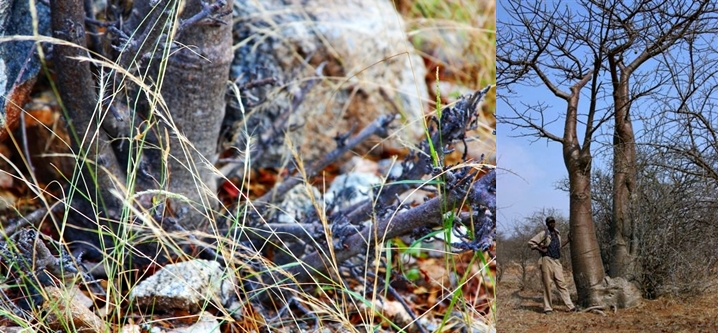
It’s been a good year – baobab harvesters

The area where baobabs are found is usually very arid and the climate not easy to grow crops in.  Many of the harvesters with whom I work have fields around their villages where they do dry-land cropping for food and to supplement income.  Dry-land cropping means that there is no irrigated water to the fields and they have to rely on rainfall.  The best grain crops to survive these conditions are sorghum and millet.  Even these crops often fail, but this year has been an exception with excellent rainfall through the area.  It was rare to see the fields around the villages so green and lush.


Continue reading....

Find more interesting articles below

Two Africans on life and Baobabs in Africa

Two Africans on life and Baobabs in Africa

Watch this: Koffi Bepe, a young Gabonese engineering student wanted to know more about the commercial value of African Baobabs. Through the African Baobab Alliance website he ended up interviewing one of their founding members; South African baobab specialist Dr Sarah Venter, for his quirky, down to earth podcast, ‘Last Week Review”. What follows is […]

Read more
World Water Day: when in drought, consult a baobab tree!

World Water Day: when in drought, consult a baobab tree!

As some of hardiest, long-lived trees around, Baobabs know how to make the most of scarce resources, especially water. On World Water Day, when we’re bringing awareness to one of our Earth’s most precious resources, what lessons can we learn from Baobabs?

Read more
Thank you Bao-med!

Thank you Bao-med!

Bao-Med, a brand of Mediceuticals, has just announced another significant donation to the Baobab Guardians program and the Baobab Research program. Bao-Med is one of the Baobab Foundation’s most generous supporters.

Read more